First things first, I'm going to be live on TV (kinda) … tonight! It's a panel discussion tonight on HuffPost Live, 7.30pm EST. We'll be discussing the many advantages of long distance relationships, so do feel free to tune in online!
You'll also be free to laugh at my accent. It's gotten ridiculous these days, Americans often ask me now "where are you from?" out of genuine confusion. Where am I from? Suburban PA? England-then-Scotland? Whatever works.
I'm looking forward to my HuffPo panel appearance, which is soon to be
followed by plenty of other fun things that I have in the pipeline. Life certainly has sped up in the past couple of months, and I have a lot of expattery to tell you about, from my experience so far with US healthcare, the differences between UK and US driving tests, that other time I was kind of an expat (that I forget about), and more.
There's one day a year when my combined degrees in media and European politics become supremely useful. Wikipedia states that it's the most watched non-sporting television event in the world: Eurosong night.
I know far more about the Eurovision Song Contest than is healthy for a dynamic young woman like myself.
I probably could have done a week's worth of posts during the run up to the final, but I spent most of the week sulking that I wasn't going to be able to watch it. Due to a twist of events, combined with Irish broadcaster RTE graciously providing a live webstream for displaced European expats like myself, I did have the pleasure of introducing this strange cultural phenomenon to my US relatives. Next year, I promise, I'll give it the attention it deserves.
To all those who are completely oblivious to what I'm talking about, Americans especially, here's how Eurovision works:
In the 1950's, after Europe had been all but torn apart by two world wars, experts and leaders devised some clever soft power policies to ensure that kind of devastation would never happen again.
One solution was a series of trade pacts that eventually evolved into the European Union. Another was a solution composed (sorry) in Switzerland: A continental pop song talent show.
And so for over 60 years Europe has been lumbered with an overly complicated political system from which no member country can quite disentangle or disassociate itself. It comprises petty spats, an impenetrable voting system that leaves everyone unhappy, cultural faux pas, lingual slip-ups, a hugely bloated budget which favors certain large countries over others, and some questionable fashion. And that's just the song contest.
During my first year living here in the USA I've compared a number of American events to Eurovision, such as the July 4th concerts, the Superbowl and the Draft. But there's no one way I could explain Eurovision to my American family: they had to see it for themselves.
Americans are unashamedly proud of their cheesy bravado, while Europeans hide their glittering pride behind a layer of sarcasm. I don't think any American can truly understand the Old World until they can truly understand the feeling of simultaneous pride and shame that Europeans feel about the song contest. It's like an ugly handbag - it is just so hideous that it's actually kind of fabulous.
Yes, I watch the whole three hour show every year. But as a Brit that doesn't necessarily mean I enjoy it, I'm just fulfilling my patriotic duty. So when my dog literally ran out of the room at the sound of a Romanian singing falsetto opera to a dupbstep track, or when my Irish-American mother-in-law felt cheated when Ireland came last, and when my US husband (an International Relations professional) bemoaned the shocking political voting, I felt like they finally did now understand the true meaning of a peaceful Europe. Viva L'Eurovision!
I recently lamented the lack of Come Dine with Me in my life since I moved to the USA. I know it's standard dine-time TV fodder in the UK, but they teased American audiences by only showing a couple of seasons. My American mom-in-law is still in withdrawal. She loved the crazy menus that the Brits would devise for their unsuspecting guests.
My British mum emailed me the other day to say that the local paper had an ad looking for Come Dine With Me participants in her local area. She thought it'd be hilarious if my mom-in-law applied.
She's not going to, obviously, what with being in the USA. But that didn't stop us from creating a fantasy Come Dine with Me Menu! What would Brits make of this brash American spread?
STARTER: BUTT SLIDERS
We'd base the starter on this juicy looking recipe from Cook's Country. It's traditional St Louis barbecued pork, using part of the pig known as Boston Butt. It's not, as I learned, literally the butt, and in the UK it's known as 'pork hand'.
A slider is just a mini burger, so we'd serve small portions of Boston butt in a mini starter-sized bun: Butt Sliders.
This would be a perfect introduction to a great US feast, plus the name is almost unbeatable. Imagine what the refined British Come Dine With Me contestants (ahem) would make of it!
MAIN COURSE: BEER BUTT CHICKEN
Again, this title may flummox the poor imaginary Brits attending our fantasy dinner. I've had this several times and it's always fun to make. Take a can of beer, drink half, shove it up a chicken's butt,
and barbecue. The result is deliciously moist BBQ chicken.
There's an element of danger here as British BBQs are often precariously dependent on British weather. The chicken could end up being rain-drenched rather than moist, but we'll take that chance.
I suppose we'd need to serve this with some good sides, such as corn on the cob, a good potato salad, and some dill pickles.
DESSERT: MUD PIE
This was chosen simply because its name fits the theme of this dubious sounding menu. There's absolutely nothing dainty about a rich chocolate mass of mud pie, but boy is it indulgent, and ideal to round off this hearty stars n' stripes feast.
I guess we'd serve it along with some terrible American filter coffee for a truly authentic diner taste.
Okay chaps n gals, how does this sound to you? What would your Come Dine With Me (or dinner party) menu be?
Today was the last BBC News broadcast from the legendary Television Centre in London.
I've mentioned a couple of times just how much I have loved the BBC's Television Centre (TVC), namely here and here.
In a rarity for this blog, here are some fantastic images taken by a good friend of mine who works (yes, still works) in TVC. He's been doing a beautiful job of capturing the transition of TVC from the nucleus of British broadcasting to, well, a spooky technological relic. He kindly gave me permission to show you some of these photos, but make sure you check out the rest of them here.
The Gallery of TC 10 (Studio 10), which used to look like this.
TC 7 during its last news transmission, only you can't tell, because the studio sign has disappeared.
Don't miss out on his other photos here - they progress from 2006 right up until the last news broadcast today.
You can also watch TVC's last news broadcast here:
I
grew up seeing this building on television, and even though I'm on
the wrong side of the ocean, it's weird to think that British
television will no longer be filmed within these cavernous studios set inside a giant doughnut.
Me petitioning the BBC to show more programs in the USA (actually I was working and that didn't cross my mind, sadly).
I do love American television. I really do. There's just something so garish and gluttonous and appealing about it. Watching US TV is like going for a sneaky midnight drive-thru meal: It's so wrong it's just perfectly right.
But sometimes I miss the hearty, reliable stodge of Old Blighty's television. I miss smooth deadpan voiceovers and useful signals that commercials are going to begin.
BBC America is there for those moments, but only sometimes. It's catered more to the American Anglophile rather than to the British expat market, and is filled with Dr Who and Top Gear re-runs.
Here are five shows that are quintessentially British, and that I think BBC America would do well to show. Not only because I want to watch them myself, but also because I think Americans would get a kick out of them.
1. Come Dine With Me
Premise: Complete strangers host dinner parties for each other. They judge and rate each other's evenings, and at the end of the week the winner takes home a thousand bucks.
This daytime TV format
turned prime-time hit has all the
elements of British society.
First, it's like a disastrous cooking show with amusingly amateurish results. Secondly, it has that keyhole voyeurism we all enjoy from the likes of house-buying shows and MTV's Cribs. Third, it has a competitive element and, of course, a supremely sarcastic voice-over.
My American Mom-In-Law loves it. BBC America actually used to show it, but then stopped for seemingly no reason. Perhaps Americans couldn't believe how terrible Brits are at cooking, or why we have an obsession with poking around in other people's wardrobes. Either way, America has about thirty seasons to catch up on by now. Shame.
2. The Great British Bake Off
Premise: Talented, lovely, chipper Brits
prepare baked goods in a marquee on the grounds of an English stately
home. It is exactly as twee as it sounds.
The Great British Bake-Off was a surprise hit in the UK because it captured a zeitgeist for patriotic escakeism. It is the complete antithesis to every competitive cooking program on American television.
Unlike Cupcake Wars or Cake Boss, Bake Off is understated and charming. The competitors are all nice. Two baking pros, a formidable bread-master and an exacting cake lady, interact with a female comedy presenting duo for a lilting cookery show that, surprisingly, oozes with subtle innuendo.
Late last year US channel CBS ordered an American series of Bake Off, although the women's institution that is Mary Berry already announced that she would not be involved. I'm very excited, but also intrigued to see if the charming and gentile format will translate well to this brash and proud country. Regardless, I hope whoopie pies are involved.
3. Coronation St
Premise: Working class people living on a cobbled street in Northern England work in an underwear factory, go to the pub and have marital affairs. Almost every day. For over fifty years. It's The longest television soap in the world.
The whining drone of the theme tune was the punctuation to my evening since I was very young. I grew up on a diet of soap operas at dinner. My undergrad dissertation supervisor even had a PhD in Corrie.
It saddened me that emigrating meant I would have to resort to nefarious means of accessing my daily fix of this domestic drama. The great news is that Hulu started streaming the show on a two week delay just last month, but I still think BBC America should syndicate the show for the expat market.
This is actually Valley Forge and nothing to do with Coronation St
4. Have I Got News For You / 8 Out of 10 Cats
Premise: Well known public figures and comedians sit at a large desk for a weekly quiz, and make timely quips about the news, providing large helpings of off-the-cuff sarcasm and political cynicism.
The USA has its own attempts at political satire, sure. The Daily Show (and its spin-off The Colbert Report) are decent, and many Brits actually watch the international editions. Stewart and Colbert satirize the format and sensationalism of most US cable news shows: One person, one desk, lashings of hyperbole and caustic humor based on the strangest political truths.
It doesn't quite compare to the rigors of political satire in the UK though, where politicians are invited to get mercilessly mocked by some of Britain's brightest comedic minds. Occasionally the presenters themselves get embroiled in news stories and become the brunt of the unrelenting punchlines.
The skill of these shows is making the humor seem unrehearsed and almost throw-away. This is what makes them so British. HIGNFY excels at this, but Cats has a special place in my heart because I worked on the show (where I got to work with the charming Jimmy Carr and meet the legendary David Hasselhoff).
5. Blue Peter / Newsround
Premise: One is a magazine show about making popular items from toilet paper tubes; the other is the most trusted and cogent news source in the UK. Both are kids' shows.
Here's one I made earlier…The famous Thunderbird Tracy Island craft make is on display at the BBC Television Centre.
What will happen to it when the BBC moves out of the building?
Blue Peter is like the Scouts for coach potatoes, complete with badges. It's also the world's longest running childrens' TV show, featuring a mishmash of celebrity culture, sports and activities, fundraising appeals and arts and crafts.
The show has had some defining moments: making a popular toy (the Thunderbird island above) out of paper mache and soft cheese containers; having a baby elephant poo in a studio live on TV; and breaking the news to young viewers that the goldfish in the studio garden were killed after drunken soccer players broke in.
Newsround is not Aaron Sorkin's latest HBO drama; it's a long running news broadcast specifically for children. It's one of the best news shows on television due to the BBC's remit for balanced reporting and its ability to simplify complex news stories. Perhaps Sorkin's Newsroom would have been more entertaining if it had been about a kids' news show instead.
Kids in the UK graduate from Sesame St and progress onto Blue Peter and Newsround before becoming sensible, civic-minded citizens. Or at least they used to before the Disney Channel became more popular. Kids just aren't into toilet tubes like they used to be.
Fun Fact: There's a video in existence of myself interviewing the current Newsround newscaster, the lovely Ore Orduba, while he pretends to be Jessica Alba. No - you ain't ever gonna see it.
What are your favorite UK TV shows? Do any of these sound more appealing than Sherlock and Downtown Abbey?
Welcome to Glad Notes, where I'll ponder cultural quirks from the New World (namely North America) and the Old World (Europe, mostly the UK). Those strange little facts that really bring no meaning to your day, but maybe you'll be glad you discovered something new.
As a Brit living with an American husband, I stumble across these things almost every day - usually in the midst of, or because of, some light-hearted marital dispute. The plus side of our cultural misunderstandings is learning useless new nuggets of information… Which I can share with you here.
Which Bunny Booster?
It's that time of year when TV commercials gain seasonal relevance. In the UK it's perfume adverts and supermarkets, and in the USA it's anything which could possibly have a vague link to Christmas - such as batteries for all those Christmas lights and annoying kids' toys.
Mark: Ha ha ha! Don't you get it? It's funny because they're making a play on the Energizer bunny.
Me: The what? That's the Duracell bunny. It's a thing.
Mark: No, it's the Energizer bunny, Duracell are copying them.
Me: Uh, it's always been the Duracell bunny. Energizer doesn't even have a bunny.
Mark: You're wrong.
Turns out we were both wrong.
Energizer does have a bunny. But Duracell didn't copy it, Energizer did. And you might never see the Duracell bunny in the USA.
Duracell started the rabbit battery thing in 1973.
The edgy Energizer bunny gained far more traction in the USA than the cutesy Duracell one. It didn't initially work out well though. Duracell outsold Energizer as people associated "pink bunny" with "Duracell batteries". Oops.
That was until Duracell's trademark expired in the USA, and Energizer snapped up the bunny booster trademark. The Duracell bunny was chased out of North America and went into hiding in the Old World.
So this is why the phrase "Duracell bunny" is ingrained into my cultural subconscious to mean something that just keeps on going, but for Mark and other Americans it's the phrase "Energizer bunny". Mark insists the Energizer bunny is much better, but the traditional cuddly qualities of the Duracell counterpart are much more appealing to me. I detect a bit of cultural bias towards our own bunnies, as it were!
I think that demonstrates in part how pervasive cutesy commercial icons can become. We grow up with them, and they become part of our cultural identity.
Over the past few years the UK has been dominated by Russian meerkat insurance peddlers. They've become so popular that they sell plush toys, they sponsor one of the UK's highest rated prime time shows, and a Scottish aquarium proudly advertises a mob of meerkats amongst their stingray and starfish.
I thought I'd have a hard time explaining to my mother-in-law why Russian meerkats sell car insurance. But she instantly fell in love with them, proclaiming her desire for a meerkat plush. The site doesn't operate in the USA though, which is a missed opportunity.
I realized there was no explanation needed. Then the same thing happened to me in Macy's at Thanksgiving. My mum and I saw a rather charming pyramid of plush ducks that yelled like an angry Philadelphian when squeezed. We had no clue what they were, so we bought two.
On the train back a woman asked if she could squeeze our Aflac ducks. We happily obliged and she thanked me graciously as the duck yelled AFLAAAC.
Later during the Thanksgiving parade we saw the same duck trundling above the streets of New York. A commercial followed, explaining the good work that Aflac does. Later again I saw this bizarre commercial, where the Aflac Duck raps in a battle against a pigeon.
It turns out the Aflac Duck is a seasonal thing. I didn't know. I didn't need to know. I already loved it.
We love our commercial cultural icons. It's a universal matter of forming a strange cultural identity. Just ask the Japanese, who seem to have an anthropomorphic character for everything. AFLAAAAAAC.
It's Saturday night and Mark is watching the Smithsonian Channel while I'm editing photos. It's a World War II documentary narrated by Martin Sheen.
You know about the rule of cable TV? There always has to be at least one WW2 documentary broadcasting at a time. It's like the screaming baby rule on long haul flights; if there's no screaming baby the airline has to find one and put it on the flight.
I'm not paying much attention to Sheen's dulcet narrating tones until Mark exclaims: "Grannies. You had grannies?"
Mark: What? Now I'm singing the theme tune to Dad's army. Mark has no idea what's going on.
Me: You've never seen Dad's Army? How can you never have seen Dad's Army? That's important historical television! Okay, well, you know the bit at the beginning of Bedknobs and Broomsticks?
Mark: No.
Me: You've never seen Bedknobs and Broomsticks?
Now I'm singing 'Bobbing Along' and it's kind of freaking Mark out. Maybe it's the rhythmic bobbing I'm doing. I start gesticulating wildly.
Me: But it's about World War II, witches, medieval knights! It's got live action AND animation. And the home guard. It was our "well-organised militia" if you will.
Mark: What? Well-organised grannies? No wonder you needed our help.
Uh oh. It's serious now.
Me: Oh yeah? And just when did World War II start?
Mark: 1942.
Me: 1939!
Mark: It wasn't the World War until we saved your asses!
Me: It started in 1939, buster. You guys were late.
Mark: Did you ever see Patton?
Me: No.
Mark: You've never seen Patton!? Did you see Saving Private Ryan?
Me: Uh, no.
Mark: You've never seen Saving Private Ryan?!
And so it went on.
Our transatlantic marriage can quickly degenerate into a full-blown argument about our respective countries' efforts in World War II. It's almost unbelievable how heated and protective we can get about the wars, while throwing in disbelief at our differing pop culture exposure. Just ask any American when World War II started: You'd be surprised how many say 1942.
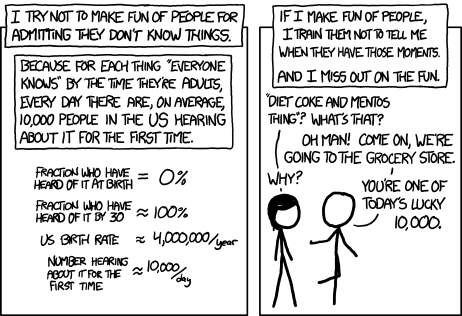
But after we poke fun at each other comes the best bit. On an average day, in our transatlantic marriage, one of us is one of the lucky ten thousand people in the US learning about something for the first time.
Disclaimer: This is a guest post with a difference: It's my mum! As the US coverage of the London Paralympics has been so bad that even the International Paralympic Committee has complained about it, I went to my mum for a review of the UK media coverage.
I do watch a lot of sport on TV – I admit that. From the very moment that London was awarded the Olympic and Paralympic Games in 2005 I was already planning my viewing.
Come 2012 when the Olympics finally arrived, the viewing options on how to watch the Olympic Games had been transformed. The BBC’s coverage was astounding – taking full advantage of digital TV and extensive options on their website. If I wanted to watch every moment of the archery or the women’s pole vault competition then I could. And I did!
And so to the Paralympic Games. Rather than being on the BBC, the Paras were awarded to Channel 4. This to me seemed an unusual arrangement. Channel 4 is partly a public service channel, but also funded by advertising. It has always had a a remit to be alternative and edgy, at the same time aiming for the sensational (Big Brother and Big Fat Gypsy Wedding anyone?) so I could understand the `disability’ aspect falling under their remit. But Channel 4 are not noted as a `sports channel’ – horse-racing and Kabadi aside.
The first test came with the Paralympics Opening Ceremony. The main commentary was by Jon Snow, the Channel 4 newsbroadcaster. For all Channel 4’s sensationalism they do take their news very seriously, and this spilled over on to the Opening Ceremony commentary. As the athletes paraded around Olympic Park Jon Snow told us at length each country’s particular political woes and upheavals. What he didn’t mention though was disability, and it soon felt like the elephant in the room. Happily the other commentators, who have disabilities themselves, did not veer away from the subject, and it made for some informative and compelling exchanges of opinion. Danny Crake, for example, was keen to point out which countries could obviously only afford the cheapest and most outdated of wheelchairs, and how support should be given to some countries or it will never be a level playing field.
The other `elephant in the room’ was of course the adverts – and there were a lot of them. It seemed slightly disrespectful that they waited until a country with many athletes came into the stadium and then cut to adverts because there was time to do so. But then it transpired that whilst the ads were on smaller nations appeared and disappeared and never got their moment of fame at all. Apparently Channel 4 has said that they have actually shown fewer adverts, and advertising does allow for events such as the Paralympics to be shown.
Also unlike our experience of the Olympics, advertising also appears in the Paralympic venues. It is somewhat strange to see BT logos actually on the velodrome track, and the swimming pool to be
festooned with jolly Sainsbury’s bunting, but I understand someone has to pay for all this.
And so to Channel 4’s coverage of the Games, which so far has been, on the whole, very good. The Paralympics have unique broadcasting logistical issues – and how to refer to disabilities has been the least of the problems. In fact, Channel 4 has been candid about the disabilities and has provided LEXI, a comprehensible guide to Paralympics classification. Some sports, such as swimming, running and wheelchair events get a lot of air-time. Others, such as Goalball and Boccia, less so. Even in the dressage, where Team GB have done so well, is not fully covered. However this is due to the Olympic Broadcasting Service and not Channel 4, who went the extra mile to get their own cameras to the equestrian venue.
Also consider that for the 100metres sprint there are 15 gold medals up for grabs because of the various classifications and you soon realise that to broadcast every event and every medal ceremony must be nigh on impossible. Channel 4 does have its accompanying website with four websites of live action plus a text update service, but even this cannot provide absolute blanket coverage of every minute of the Games.
Having said that, Channel 4’s broadcasting of the Paras has been a huge success: partly helped by the overspill from the Olympics (the warm-up event!): partly because the entertaining and enthusiastic presenters, Clare Balding (a BBC host who is no longer BBC-exclusive and is fast becoming a UK national treasure) and Ade Adipetan deserve a special mention for their entertaining double act; partly because Para events are darned exciting sports to watch (Murderball, anyone?!) and partly because of controversy supplied by a certain Mr Pistorius.
I have never been a fan of the 'Stick the microphone under the nose of the athlete that’s just competed (and lost)' approach, but boy, it did Channel 4 no harm at all as Oscar let rip with his immediate reactions! Whatever the reasons, the Paralympics on Channel 4 have become so successful that they have increased the number of hours broadcast on the main channel.
During the first week the Paras were demoted to one of their digital channels to make way for such delights as teen soap Hollyoaks. In this second week, it is Hollyoaks that has to move. Only the Channel 4 News stays in its prime-time slot and that is because of broadcasting regulations, and Jon Snow no doubt. However, last night there was a women's swimming final with a GB medal chance so they showed that on More 4. But this clashed with the 200m heats featuring a GB guy and Oscar Pistorius, so they showed the heats during the News. The Channel 4 News has effectively become another Paralympic programme; clever way to get round the regs and the clashes!
Whatever the reason for increased viewing figures, be it Clare Balding, patriotic fervour, Olympic withdrawal symptoms or the impromptu stooshies* over prosthetics, it has to be good news for sports broadcasting, disability sports and Channel 4.
This week and last week the US media has been focused on the Republican and Democratic Conventions, respectively. As TV news in the USA is not required to be impartial, unlike in the UK, each channel has its own spin and angle on the events in Tampa and Charlotte, which are also streamed comment-free on C-SPAN. There really is a super-serving of political rhetoric on US screens. It's a far cry from the staid UK political party conferences: Gearing up to the US election is a TV broadcasting sport.
And talking of sport and TV broadcasting, there has been no spin or angle on the Paralympics, which officially opened last week. My experience of watching the London Paralympics in the USA has been non-existent. At one point some footage of the Paralympics did catch my eye on TV, and I realized it was a BBC America news bulletin. I don't think that quite counts. At least the interwebz came to the rescue.
While some folks on Twitter were going wild over Obama's appearance on Reddit, the Paralympics opening ceremony was taking place and being broadcast on Channel 4, the UK's public/private terrestrial TV channel. British viewers, perhaps spoiled after the generous helping of sports broadcasting from the BBC, did not appreciate the trappings of commercial broadcasting:
Random screenshot of random Tweeters (ie I don't know any of them)
This reminded me of my reaction to watching the Olympics opening ceremony on NBC. Not only was I experiencing such a spectacle from another country's perspective for the first time, I was experiencing it with commercials for the first time. The commercials were a nuisance, but not enough to ruin the experience. Certainly not as much as a tape-delay, or discovering that whole sections of the event had been cut to squeeze the commercials in. And certainly not as much as discovering that scraping Twitter would be as close as I'd get to seeing the Paras ceremony.
I was further amused when some viewers expressed renewed appreciation for public television (which is an entirely different concept here in the USA):
UK broadcaster Tony Blackburn.
"Choose sitting on that couch watching mind-numbing spirit-crushing game shows"
That last one, yes, is Scottish author of Trainspotting Irvine Welsh bemoaning the quality of his 600 US TV channels. US TV has succeeded in making political broadcasting a sport, and international sport broadcasting an eerie spectre; I know it's happening somewhere but I just can't see it.
The London Olympics are over - now what? Can Britain keep up the vibe?
I was in a truly privileged position as a spectator in the London Olympics. I traveled economy class, stayed in a budget hotel, had ordinary tickets. But I attended as both a tourist and a local. I saw things from both sides. I experienced the airports, tube, venues etc as a (newly-minted) foreigner, but really rooted for Team GB to do well. By Team GB, I meant everyone, not just the athletes.
This fellow English-born-ex-Fife-expat(and repat) summed up the logistical experience of the London Olympics really well, good and bad. The volunteers and staff were fantastic. They gave directions, they offered encouragement and lightened moods. They suggested great spots to watch the games, and acted as ambassadors who presented the UK as a friendly and outgoing place full of friendly and outgoing people.
The transport and infrastructure also worked perfectly (for me, at any rate). London felt more vibrant and excited than I've ever felt it. I went to bits of London I'd never been to before. Brits seemed genuinely surprised (in a good way) that things went off without a hitch. Blimey, Britain can scrub up well when lit on the world stage.
The BBC can be proud of its coverage as well - which I can compare first-hand to NBC. The overall choice and the ease with which to access it (even in budget hotel rooms) was not only impressive, but exactly what media outlets should be hoping to achieve with technology available to them. I'm not going to go into comparing budgets here and now though - if anyone else has I'd love to see.
What happens now? Will there be long-lasting positive legacy from the Games? Will it truly rejuvenate the East End? Will this bring a new era of super-serving broadcasting? The tagline for these Olympics was "inspire a generation" and the
British government is keen to see Britain's bounce last a while. This hasn't happened in Cameron's case, but it'd be great to see Team GB match its medal haul in four years, and it'd be great to have new and old generations inspired to take up sports, whatever the reason, whether Taekwondo medal hopefuls, or healthy yoga-bugs. But sport success isn't the only inspiration to take from the Olympics. Two different comment pieces in the Guardian cover this topic in different ways, one about the sponsors of the games and another more wry piece about the economy.
What legacy would I like to see? What inspired me most? Amongst all the branding, celebration and glamour of the games, there's a different message to take.
The Olympics see more defeat than success - only the successful few take home a 'prize' - but the message of perseverance and inspiration would be a great one to carry through to the next British generation. Seeing all the defeated athletes getting cheered on and encouraged was an amazing reminder, both to keep on living the best I can and with the best mental attitude, but to support others around me doing the same.
My previous employer also has a great article about one particular aspect of the London Olympics that could be a great legacy if recognized and nurtured: the Gamesmakers. Can the UK inspire a new generation of civic activists? It's food for thought.
As we wave goodbye to London 2012 and the UK's moment of glory, can the UK keep up the enthusiasm for civic pride?
Glasgow has the Commonwealth Games in just two years. While in London I already heard about people keen to pick up even tickets, including me - I want lawn bowl tickets. I hope there'll be the same enthusiasm to get involved too.
The British stereotype is of reserved underwhelm and understatement. Americans are used to directness and hyperbole. These two different cultures result in entirely different advertising styles. British adverts are far more likely to tell you not to buy a product, whereas US commercials are much more like a Carly Rae Jepsen parody on a sugar high: Hey, this is crazy, but buy me maybe?
Because Brits are so reluctant to be direct, British ads have to be creative. Kate Fox writes a funny-coz-it's-true account of TV advertising in the UK:
The humorist George Mikes claimed in 1960 that 'All advertisements - particularly television advertisements - are utterly and hopelessly un-English. They are too outspoken, too definite, too boastful.' … the English should evolve their own style of advertising, recommending, 'Try your luck on Bumpex Fruit Juice. Most people detest it. You may be an exception.'
Kate Fox points out that 30 years later this advert actually happened in the UK: I hate Marmite.
I love Marmite, and also loved this advertising campaign. It was a talking point - do you love or hate Marmite - which is exactly what an advertising company hopes to achieve!
I saw a similar billboard on the London Underground during my trip to the Olympics last week. It was British Airways urging people not to fly: Don't Fly, they said, stay at home and support Team GB. It was another perfect example of Brits using their indirectness, their awkwardness with pushy boasting and brash marketing, to create a talking point. Of course it wasn't altruism on BA's part. I reckon most folks flying to escape the Olympics may have opted for a budget airline, not BA. So rather than killing their own business, BA probably affected their competitors' business, if at all.
Incidentally, the article I linked stated that BA predicted they'd get a lot of business from expats travelling back to London. Sorry BA, I travelled with someone else, but your adverts were better.
BA were an official Olympic sponsor. I know this because their billboards peppered the London tube, along with others from other official sponsors. I had read and heard endless criticism of the commercialization of the Games, which limited choice in Olympic park. I didn't visit Olympic Park, and while I can't disagree, I was struck by something interesting at the other venues I did visit: There was very little advertising at all.
I checked back on footage from previous Olympics (okay, Barcelona '92 and Salt Lake City '02) as London was the first I'd been to, and it wasn't an anomaly. It was, I have to say, nice to wander around the venues and enjoy the sports without constantly being reminded who had helped pay for them. Outside of the arenas, and mostly in the tube stations, the billboards were witty and fun and made me feel back at home - including Marks and Spencer saying "On your Marks for Autumn". Oh M & S, bastion of British sensibilities and sensible underwear.
USA advertising is far more in-yer-face to appeal to that direct and hyperbolic US culture. I've written about it before: American ads pretty much all say "you need this product. Go buy it!" And the majority of commercials seem to be for drugs, poptarts, erectile dysfunction, and diabetes. It's a disconcerting combination of messages to receive during a short ad break.
By 'drugs' I don't mean anything illicit, obviously, but I don't mean over the counter stuff either. I mean prescription medication. "Ask your doctor for XYZ" - it's noticeable to Brits purely because of the different natures of the UK and US healthcare systems. And then there's diabetes.
This map states that prevalence of diabetes in the USA is over 10%, while in the UK it's almost 7%. But I'd love to know what percentage of US commercials relate to diabetes products.
My absolute favorite US commercial right now is for something called Accu-chek Nano. This jingle is the summer pop hit of 2012. You thought it was Call Me Maybe? Nope, you are far off the mark. When I first saw it, I thought it was for a mobile phone for girls. It's not. It's a blood checker for those with diabetes.
This jingle is something else entirely. How a commercial for a diabetes product can be so un-ironically saccharine, I don't know, but it's oh so catchy and moreish. You've listened to it twice already now haven't you? You're resisting the urge to get up and dance. The only thing it's comparable to is the equally girly I love Horses advert that used to hit British screens every New Year:
I'm not the only one who has noticed this amazing jingle. And, in a twist of the strange, it was even used as the soundtrack for a flash mob at the American Association of Diabetes Educators conference.
They really are trying to cash in on the whole Call Me Maybe vibe to attract a target audience. And that's okay by me. If anyone could actually do an Accu-chek Jepsen jingle remix, I'll send them a whole bunch of candy (irony intended).
Once every year the American population tunes in to the Superbowl, not to watch the sport, but to watch the heralded Superbowl commercials, and to see commercials done properly. Why advertisers can't do that all year round I don't know, and I haven't even gotten round to mentioning Jos. A Bank yet … Put simply, Jos. A Bank is American directness at its finest, and this Brit finds it hilarious.
Have you secretly danced to the Accu-chek Nano jingle? What's your favorite/least favorite commercial? Do you like Marmite? Have you ever actually bought a suit from Jos. A Bank, and if so, what came free?
I'm very used to commercials on US television. I have seen TV shows cut down to fit more commercials in. This is most visible when commercial US providers struggle with ad-free offerings from the BBC. I've seen whole interviews cut from episodes of Top Gear. I've even seen commercials cut down to fit in more commercials: There's
one about a sagging couch screened occasionally and I've never actually
seen the end of it so I don't even know what it's advertising.
Television is an industry and a public service. Sometimes these elements are combined (see the UK's Channel 4), sometimes they are separated (compare the UK's BBC, the USA's PBS and every commercial channel out there). On NBC, commercials during the London Olympic Ceremony were expected, and even okay, even if they did disrupt the flow of the performance.
NBC defended its editing of the ceremony before it was broadcast, on tape delay, with commercials and NBC commentary. In and of itself, these things are probably okay, even if they did disrupt the flow of the performance. Even if it's an out-dated approach to global event media, and even if NBC was live-Tweeting the very ceremony it wasn't broadcasting anywhere live (yes, really).
The commentary during the performance has already been much maligned, and truthfully I tried to ignore it as I enjoyed the performance. "The only commentary should be understated and sarcastic" I said, recalling UK efforts in Eurovision commentary. For Mark's American parents, who are more used to the NBC commentators on every day news, it was a source of irritation. "Shut up Matt, shut up Vieira" they cried at frequent intervals, especially as the commentators spoke over the venue's own announcer. I didn't know at the time that #shutupmattlauer was trending on Twitter.
But the next day, when I read criticisms that
the performance felt disjointed and incoherent, I got the feeling that
this was not due to the ceremony itself, but rather the way it was
broadcast. And that's disappointing. Of course I felt very protective of the British ceremony, but broadcasting should enhance, not take away, from an experience. When #nbcfail was also trending on Twitter, it became apparent that the online community did not think the broadcast was enhancing much at all.
As a Brit it is hard not to be personally offended by NBC's decision to remove the touching Abide with Me element of the ceremony. Moreso because the UK commentary recalled the 7/7 London bombings, which happened the day after the announcement that London would be venue for the 2012 Olympics. But the section was supposed to be more than that; it was a poignant memorial for "those who are absent". The London 2012 Ceremony Guide states:
Spectators have been invited to present images of loved ones who couldn’t be with us tonight. In a moving moment, those who are absent from us are digitally present.
Terrorism in any guise is deplorable, and this element allowed for a beautiful moment of reflection for all nations during the celebration, as NBC's Bob Costas had already planned to do in his commentary, for the 1972 incident. Deadspin has covered the missing memorial, stating that it's a "mystery" why the section was cut. NBC defended its decision post facto, saying their edit was for US audiences.
But I've been following the #nbcfail comments and commentary. US audiences are not happy, and not just this oversensitive displaced Brit. Audiences who pay for cable TV, who want to watch live online and on TV, and in any multimedia way that suits them best: They aren't happy and they want more. They want prime time repeats and round-ups after the event, sure, but they also want unedited footage at the point of action (of both ceremony and sports). And if that's not what these audiences are getting they're all too happy to publicly declare that they'll use any means possible (legal or otherwise) to get the multimedia product they desire.
Good business would suggest that NBC should please its audience and give viewers what they want. NBC says it carried out market research that said people preferred prime time round-ups. Business focus groups are rarely as broad or wide as the opportunity to gauge public opinion that Twitter provides. Focus groups for example are expensive. They are comprised of what, up to twenty paid contributors, many of whom make a career of going to focus groups? Twitter is spontaneous, open, free, and offers up to 500m opinions. I've noticed that the trending theme is no longer #nbcfail but #NBC, and that NBC accounts are more frequently retweeting positive comments. I'm not sure what these mean, but it suggests an acknowledgement by NBC of the online ruckus. Maybe they are worried after all.
I hear the BBC coverage is fantastic, I know the Guardian's Olympics
website is brilliant. But the BBC is publicly funded by the UK
taxpayer, and the Guardian is struggling with its digital income models
(I know because I went to their Open Weekend event and talked it out
with them). As summed up by Jeff Jarvis, maybe the BBC "superserves" its audiences because they pay the bill. NBC serves advertisers because they pay the bill. Jarvis says he doesn't buy that argument.
The key thing, though, is that NBC hasn't failed. They've got the exclusive contract to show the games, and they've got the ratings (and apparently Business Insider is happy too). And maybe the model for profiting from multimedia sports coverage just hasn't quite been refined. Maybe sticking with an old familiar model is safest and most profitable (even if it garners complaints, as the NBC model did in 2010 as well).
NBC has the contract for the Olympics until 2020 I believe, so until then I'll stop being an offended Brit, and continue to be a fascinated media scholar.
So, just for fun, to cast the cat amongst the pigeons, it'd be interesting to imagine what Google, the company which traditional broadcasters fear, would do with the rights to such an event. I can only imagine that'd be a multimedia spectacle with an innovative income generation business model.…What do you think?
If you'd like to read other expats' opinions of the NBC spectacle, I recommend Expat Mum, and LOTS. Both have excellent blogs generally, and both have also covered this strange experience of watching the homeland's shining moment from another country's perspective.
All eyes are on the motherland right now, and it all kicked off on Friday with pomp, circumstance, poignancy and some gratifying Britishness. How did it look from the eyes of a displaced Brit, an Anglophiladelphian chap, and his all-American parents?
We sat with our fish n' chips and HP sauce, and engrossed ourselves in the television spectacle. It started at the murky Thames Estuary, tracing the river's journey to the heart of the UK's capital and raising to an aerial shot of the city center. Without missing a beat I exclaimed "doof, doof, doofdoofdoof doof doof" just moments before the TV soundtrack blared:
DOOF, DOOF, DOOFDOOFDOOF DOOF DOOF… Mark and I cheered loudly and I knew I was in for an excellent evening.
Mark's bemused parents asked what had just happened, and I explained to them that the aerial image of London reminded me of the soap opera Eastenders, and that the ceremony had even included the hook from the theme tune. Nothing could have made me giddier. I was rapt.
Danny Boyle is my favorite director. He's versatile and exciting and daring. Trainspotting, for one, is a staple in the genre of British underdog movies. I knew he'd pull off an amazing ceremony, and not just because his depiction of the British countryside was bang on - although the hill did look just like the one by my parents' house in Scotland:
Just an excuse to include some photos from home
The ceremony captured an essence of Britain: Industry, Healthcare, and Literature (and raves). It was also a celebration of the British people, those who worked the land, those who treat the sick, those who fall in love, dance, sing, make art, go to work, fight for the British isles, and those who construct Olympic stadiums, and volunteer in them; not just those who perform professional sport in those stadiums. As British journalist/blogger Mary Hamilton wrote, it was for everyone.
The spectacle was also a showcase of British popular culture. It was supremely gratifying for us to catch the snippets of things I grew up with and that Mark fell in love with - it was Mark who pointed out the scene from Coronation St. I pointed out elements from that ubiquitous movie genre, the British underdog movie, and we all debated the music. We cheered familiar icons: the Queen (of course) and Bond, Churchill, Poppinses defeating Voldemort. Mark's parents were in stitches at Mr Bean. Cue Chariots of Fire, and I said "that's St.Andrews". It didn't sink in until they saw the skyline and the chapel where Mark and I said our marriage vows, and they gasped with excitement. They had been there; they had an ownership of the ceremony.
The ceremony did have something for everyone. Some folks were bemused by certain cultural references, or missed them entirely. This is a fair criticism as it was jam-packed with private jokes, but there were plenty of elements that most could relate to. It was a rare case of Brits being prideful and characteristically self-deprecating, at the same time, while acknowledging bittersweet elements of the country's long history. There was poignancy, and even a moment where the Queen looked a little verklimpt (or just stoic, it was hard to tell). That's my home country all right, on show for all to see.
It wasn't until the next morning that I learned of the missing poignancy. Why were my British friends and family talking about Windrush and 7/7? We watched the beautiful missing scene, stunned at our lack of recognition, and at Emeli Sandé's performance of Abide with Me.
*Incidentally, I showed this to Mark and he questioned why it was based in LA but Rude Dog is obviously a gangster from NY. As a young kid I clearly hadn't noticed this. Also, we discovered that as kids neither of us paid attention to whether a show or cartoon was from the UK or the USA. Except the Rug Rats, which I thought was an accurate depiction of childhood in the US.
If you're interested, apparently the amazing Dream Stone was actually British and Mark had never heard of it. He'd also never heard of Geordie Racer. I'd never heard of Reading Rainbow (and he, Rainbow). I'd also never heard of The Halloween Tree or the dubious Liberty's Kids, which I noticed actually came out in 2002. Mark says it's still "an awesome show."
I was sitting in the BBC bar chatting to the production team tonight after working on the live show when something exciting happened.
I've had a blast working down here. From the moment I stepped into Television Centre, I thought "I belong here!". It reminded me of my days as a theatre brat. TVC in itself is an amazing building steeped in history. I hear the BBC is selling it off in a few years, so it's been a real honour to get the chance to be a part of its history.
So I was talking to some of the interns and they are all interested in my situation. One of them asked when I was heading to the New World, to which I said "I don't know exactly, I don't have my visa interview yet. Once I get the date I'll have a firmer idea of when I'm going."
People ask us this question a lot and it's hard to answer because I've been living week to week recently. I deliberately left my previous job early so I didn't have to keep them hanging on while I'm hanging on. The next stage could happen very fast, when it happens.
During our conversation, someone poured me a glass of wine and I checked my emails on my phone. And there it was. A letter from the National Visa Center with a date for US embassy interview.
"Hey, can you repeat your question to me?"
"When are you moving to the States?"
I showed them my phone. "It looks like I'm moving in June!"
This stage of the process splits in two, where my job is to apply for the visa, and Mr's job is to provide his financial information. At this stage, the visa application is just like a standard application - I have to provide a ton of personal information (most of which they have already) about my past, my residences, my jobs, and my family. Mr's paperwork is a little more interesting because it requires him to accept total financial responsibility for me.
As a married couple, we didn't see this as such a big deal, but it is an incredibly important element of the immigration process. No country wants a new immigrant to become a financial burden on the state, so it becomes the petitioner's responsibility to ensure that doesn't happen. Not only does Mr have to prove he has enough money to sustain us both, but he also has to agree that if I ever did access any state aid, he would be required to pay it back. This means it'd be useless for me to try to access welfare or any other kind of benefit.
The financial requirements for a family migrant petition is proof of income/savings 125% above the US poverty guidelines. It's not a huge burden, but it can also be topped up by using co-sponsors, such as family members who sign the same forms accepting financial responsibility for the immigrant.
In this way, the state is placing trust in the petitioner and their family with regards to the character and potential financial burden of an immigrant family member. As I said, no country wants or needs new dependents, but I also believe it's because it's assumed that the petitioner is the best judge of character of the immigrant, and therefore the best judge of whether the immigrant's intent is good and true. The petitioner takes all responsibility for the immigrant and is therefore first line in defence of any potential fraud. Of course, no immigration officer spends as much time with a potential immigrant as the petitioner, so it makes sense.
Despite having already made our marriage vows promising to share our worldly goods, I did ask Mr to make sure he was absolutely sure he wanted to be financially responsible for me!
In other news, I've handed in my notice at work. I'll be sad to leave such a great position at a great organisation, but in other other news, I've also secured a month's placement in London with the BBC straight after I leave. The past few months I've had quite a few offers of placements at the BBC and was unable to take them up. I'm excited to be taking time to get some extra TV production experience after attending the TV festival, and before I head to the USA.
I'm sitting on the bus to the Political Innovation Camp in Edinburgh, and while I rarely blog in 'real time' I thought it'd be worth drafting some thoughts about citizen journalism and political commentary. I already introduced some ideas in a couple of posts below, but some interesting things have happened in these spheres in the past week that give some food for thought.
The first was Keith Olbermann's very temporary 'indefinite' suspension from MSNBC and his show Countdown over some undisclosed political donations. The donations are neither here nor there, but it was an interesting turn of events for a few reasons. First, the rally of support for Keith that manifested so rapidly over, of course, the Internet. Second, MSNBC's ability to spin the incident as demonstrable proof that the cable network is somehow more responsible and less overtly partisan or activist than Fox news. Third was Meghan McCain (daughter of Arizona Senator and Presidential candidate John McCain) defending Olbermann on account of his being a commentator, and not a journalist.
There are blurry distinctions between journalism and commentary, between bona fide media formats and citizen journalism/commentary. As I asserted before there are nuances in the codes and grammar of each, and also in the expectation the reader or viewer garners from each medium. There are some rules that all must adhere to, such as regarding libel, copyright, plagiarism, confidentiality, etc. But it'll be interesting to have discussions about how commentary and blogging is currently perceived and how it can be used.
The other events concern twitter tags such as #twitterjoketrial and #iamspartacus. Over on this side of the ocean we've seen instances of social media 'commentary' (jokes and flippant comments) becoming issues of a legal matter, but more so, issues of action. I'm sure plenty of media fans and politicos are watching these two Twitter tags with many levels of interest, as they add a different, slightly more alarming, facet to this conversation on commentary, blogging and connectivity.
I wrote my undergrad dissertation on Snakes on a Plane. The movie. The movie with Samuel L Jackson, a plane, and a bunch of snakes.
(Incidentally, if anyone cares, I did my postgrad dissertation on the concept of 'ethical power' and the EU's neighbourhood policy. I wrote both dissertations in all seriousness.)
I was pre-warned by my undergrad supervisor that I was taking a risk with the subject matter.
For info, here's how it went, in ten summary steps:
1. Some movies and TV shows are classified as 'cult'.
2. Cult movies/TV shows can be made to be cult or are 'discovered' by fans as cult.
3. Cult fans are not just consumers, but can sometimes be involved in changing the text of their revered show/movie (usually a show with more than one instalment).
4. Cult fans are also productive, by making fanfiction, fan magazines, mash-up videos/songs, merchandise, spin-offs. etc.
5. Cult fans also create a 'shadow text' (a term coined by Matt Hills) by providing commentary on their favourite show/movie (again, usually a show with more than one instalment).
6. Fans are hierarchical - those who produce fanfiction, sell merchandise, or those who comment quickest and most often are alpha fans.
7. The increase in popular use of the internet makes it quicker and easier for fans to comment and be productive and hierarchical.
8. All of the above happened with Snakes on a Plane. Only it happened before the movie was released.
9. The movie was not very successful. Fan activity died down after the movie came out...
10. Therefore Snakes on a Plane was and is not a cult movie. It was an internet fad, exacerbated by the stupid name and premise of the movie, and also in the timely increase in popular use of the internet, and namely the creation of and popularisation of YouTube. Without those elements it would probably not have been an internet fad (or fad, stupid).
I see this happening more and more. And not just with movies, but anything that becomes an internet fad. Or meme. And how they spread across the internet is simply fascinating; Susan Blackmore touches on it here in her TED talk on memes and temes. It's all the more impressive when most of the colloquial terms on the internet are coined on the same site (which, incidentally, celebrated its 7th birthday recently), and then regurgitated on two more sites, that is, Facebook/Twitter.
An IT friend once described the expediency/timeframe of various social media platforms as such: blogging is slow, Tumblr is faster, Facebook is faster still, and Twitter is fastest, being almost instantaneous. YouTube fits somewhere in the middle.
Of course, not only does slang or movie hype travel quickly, but so does news and current affairs, which should be no surprise to anyone. With all these various platforms available to us, with grassroots commentary on news as it happens, we have instant 'shadow texts' on every facet of the outside world.
In Matt Hills' film theory, 'shadow texts' are interesting pieces of literature (for want of a better word) created by fan commentary, perpetuated by what is happening on screen, between episodes, and so on. In the UK, X Factor is one of the best examples of this happening, oh so easily tracked on Twitter whenever it broadcasts. In fact, finding 'shadow texts' is so much easier since the dawn of Twitter, but you find them on forums and Facebook and in fan magazines as well.
Additionally, we have important instances of grassroots commentary on current affairs, such as the famous 'Iranian Twitter Revolution', or the people who tweeted in real time as they attempted to vote in the UK general election only to discover, first, huge lines (sorry, queues), and then eventually that the doors were closed on them as 10pm struck and they were denied their vote.
In Mexico, 'social media' is getting through censorship, and the story of the 'narco-blogger' was seized upon by journalists as an important example of social media activism and reporting:
This is an aside though, as I'm not talking necessarily about political activism here, although these are interesting and pertinent stories to follow and respond to and debate. The rapid spread of ideas and commentary certainly carries some of the same themes as online calls to activism, and indeed can work hand in hand, both in theory and in practice - does it make a difference if it's political or creative or pointless?
On Friday the Facebook movie, The Social Network, is released in the UK. This is fascinating to me simply because it's kind of meta: I wrote about how online social networking can affect a movie, and here's the ultimate movie affected by online social networking, because it's about its very inception on the modern internet.
Fellow tweeter and blogger Miss America made this comment that made me giggle:
@missamerica_: Think they'll make a Twitter movie next? Imagine how confusing it'll be with 140 characters.
To which another fellow tweeter and blogger responded with this amazing precis for a Twitter movie, and whatdyaknow, somebody already made a trailer. All you need is Sam J, and you've a fully-fledged, unstoppable, round the world, instant internet meme with B-Movie to match. Get to it New Line Cinema! Let's see if this time round the power of the interwebz can get active enough to create a whole movie, rather than just add some extra lines of obscene dialogue.
But maybe that doesn't need to happen. Gladwell's article has sparked a number of debates, and one of those is about hierarchies on the internet. The internet is used by everyone for news and marketing. The story is no longer under control, whether it's a case of adding more snakes and the phrase "motherfucking snakes on a motherfucking plane" or telling the truth about drugs in Mexico or rebutting a large corporation's PR campaigns/disaster management skills, 'ordinary people' are responding quicker than ever and getting more exposure than ever.
It's not the case that it could only happen with the internet - we've already had comedy stand-up shows and improv and art and Soviet samizdats (which literally means 'self-published') and Czechoslovakia's Charter 77 group prior to the collapse of Communism. But there is a torrent of it, and it's constant, and it's global (almost - the point in Gladwell's article about Iran and lazy journos reading only english commentary comes to mind here, and firewalls restrict access to certain people, but the reach of a well constructed, well timed, well publicised tweet or blog or youtube video is far wider than a xeroxed samizdat). People are people, but the internet magnifies and accelerates these 'shadow texts'.
So when I think about Snakes on a Plane now, which in internet terms is ancient history (going by the speed of the spread of information, not the length of time the internet has existed - Confused.com ads would have us believe it was invented in 2001, not the 1970s), the length of fad and the variety were still impressive for such a daft movie. It had an end point though, when the movie came out, which I addressed in my original essay as the main failing of the movie's hype. (What if it had it never been released?! How long would the hype have been maintained? Does anyone still Rickroll? Would it be better if a Twitter movie was mooted and never came out?) I received a mediocre grade for my dissertation in the end, unsurprisingly, but I still stand by it as an interesting piece of work. A piece of work that could be built upon proper and probably has, though admittedly maybe not with Snakes on a Plane as a case study.